
The Netherlands is small, flat and full of color. In spring the fields burst into bloom, and the best way to see them is by bike. This guide gives you the facts you need before you go: when to visit, where the tulips grow, what to pack and how to plan your first bike tour.

Quick answer: Tulip season in the Netherlands runs from late March to early May. Tulips bloom mostly in April, with mid-April as the usual peak. The best fields are in the Bulb Region (Bollenstreek), about 30 minutes from Amsterdam. The country is flat with a dense network of bike paths, so a bike tour or a bike and barge tour is an easy way to see it.
In this guide
The Netherlands at a glance
| Size | About 41,000 square kilometers (roughly 16,000 square miles) |
| People | Roughly 18 million |
| Capital | Amsterdam |
| Language | Dutch. Almost everyone also speaks English. |
| Government | Stable democracy with a king as head of state |
| Currency | Euro |
| Electricity | 230 volts, so US visitors need a plug adapter |
| Best time to cycle | April to September, the driest months |
| Tulip season | Late March to early May, peak in mid-April |
Tulip season in the Netherlands
When do tulips bloom?
Daffodils and hyacinths come first, in March. Tulips follow in April, and mid-April is usually the peak. The weather decides the exact dates, so check current bloom reports before you book.
Why do tulips grow so well here?
The Bulb Region (Bollenstreek) lies between the dunes and the polders, close to the sea. Fresh sea wind keeps the bulbs cool and helps keep mold away. The sandy soil drains well but never dries out. Old shells in the ground add calcium, which helps the bulbs grow strong. Mild winters and cool summers give the bulbs time to rest.
Where to see tulip fields
- Bulb Region: Between Noordwijk, Lisse and Hillegom, about 30 minutes from Amsterdam.
- North Holland: The northern tip of the province is known as the largest connected bulb area in the country.
- Flevoland: The Noordoostpolder has a long, signposted tulip route each spring.
- Gardens: Keukenhof is the most famous flower park. Tulip Experience Amsterdam has a tulip museum, a show garden and an indoor picking room. In 2027 it is open March 18 to May 9.
Please stay out of the fields. They belong to growers, and the flowers are easy to damage. Enjoy them from the road or bike path.
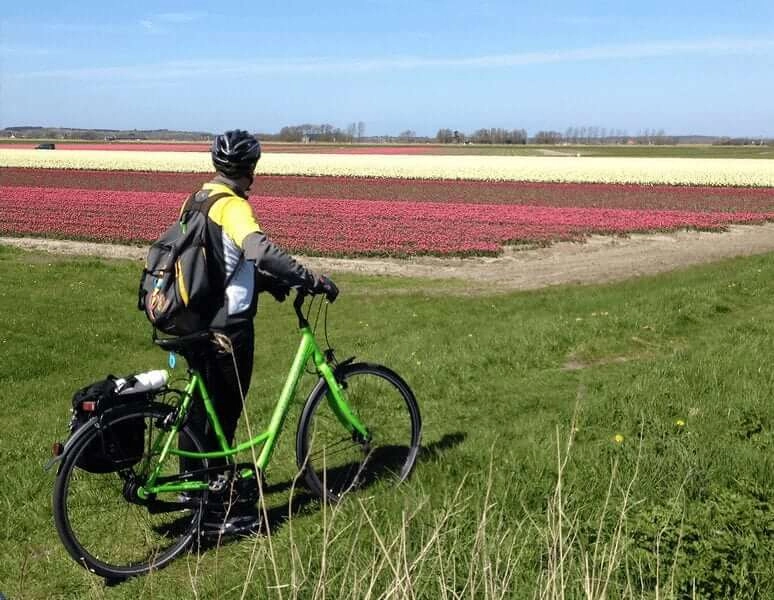
Tulip tours with Travel2Move
Want tulips and a real bike vacation in one trip? April is the busiest month, so boats and hotels fill up early. Choose the style that fits you:
- Tulip cycling tour Netherlands: a bike tour through the spring fields.
- Bike and barge tour Netherlands: Tulips, 8 days: sleep on the boat and cycle by day.
- Bike and barge tour Netherlands: Tulips Premium: the same idea with extra comfort.
See our tulip cycling tour
Cycle through the Dutch spring at your own pace, with the logistics handled for you.
Fun facts about the Netherlands
- A lot of land is new. About a quarter of the country lies below sea level. Large areas, like Flevoland, were once the bottom of the sea.
- Bikes are everywhere. There are more bicycles than people, and bike paths connect towns, cities and countryside.
- It is flat. That makes it one of the easiest countries in Europe for a bike tour.
- Growing bulbs is a family business. Families have worked with flowers for generations and still test new varieties every year.
Practical tips before you go
Money
Use euros. Major credit cards work in most places, but small cafes and farm shops sometimes prefer a debit card or a little cash. ATMs are easy to find. Tell your bank you are traveling.
Plugs and electronics
The Netherlands uses 230 volts. US devices are 110/120 volts. Many phone and laptop chargers handle both, so check the label. You will still need a plug adapter.
Weather
The Netherlands has a mild sea climate. Rain can fall any month, but April to September is usually the driest and best for cycling. Weather changes fast, so bring a light rain jacket and dress in layers. Remember that 20°C is 68°F.
Health and insurance
Healthcare is excellent. Your US health insurance may not cover you abroad, so check before you go. Many travelers add travel insurance with medical cover.
Bike rules
- Stay on the red bike paths and follow the signs. Drivers expect cyclists and give them space.
- Riding a bike after drinking is not allowed above the legal limit, so when in doubt, wait.
- You must be 18 to buy beer, wine or spirits.
Easy conversions
1 mile is about 1.6 km. 1 pound is about 0.45 kg. A 40 km day is about 25 miles. Bike routes and signs use kilometers.
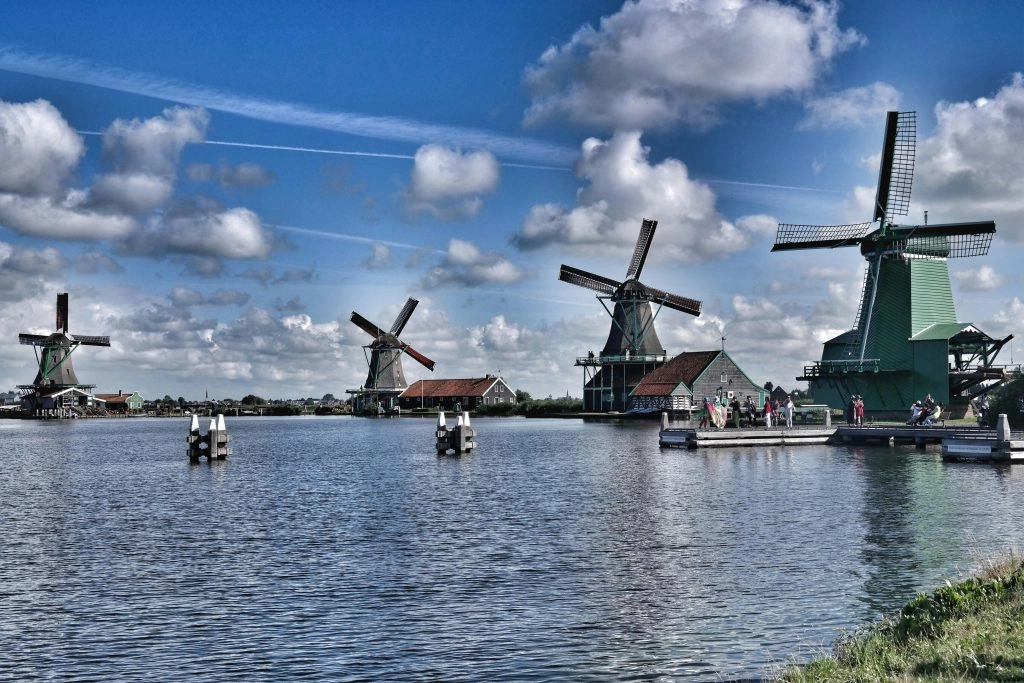
Why a bike and barge tour works so well for first-time visitors
The boat is your hotel, so you unpack once and your luggage stays on board. During the day you cycle along rivers and past historic towns. The route is flat and the logistics are handled for you.
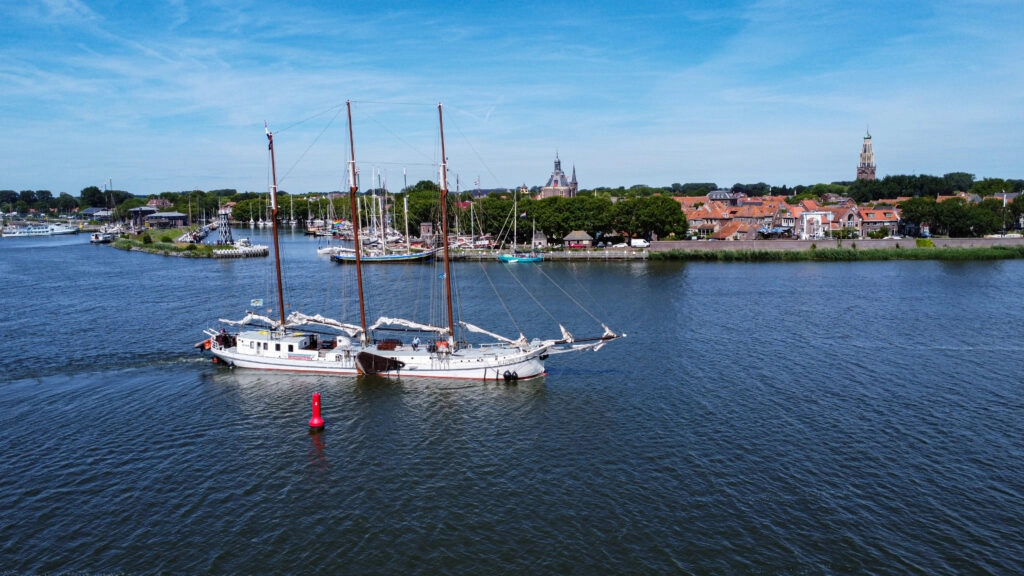
In spring, try one of our tulip bike and barge tours. For a historic route, take a look at our bike and barge tour through the Hanseatic cities. You ride through medieval towns like Zutphen, Deventer, Zwolle and Kampen. Prefer wide water and quiet shores? See our IJsselmeer tour. Browse everything on our Netherlands bike tours page.
Not sure which tour fits you?
Tell us your dates, fitness level and travel party. We will suggest a tour that matches.
Frequently asked questions
When is tulip season in the Netherlands?
Daffodils and hyacinths bloom in March. Tulips usually bloom in April, with mid-April as the peak.
Where are the best tulip fields near Amsterdam?
In the Bulb Region, between Noordwijk, Lisse and Hillegom, about 30 minutes from Amsterdam.
Can I cycle through the tulip fields?
Yes, on public roads and bike paths. Do not walk into the fields.
Is the Netherlands good for a bike tour?
Yes. It is flat and has a dense network of bike paths, so it suits beginners too.
What is a bike and barge tour?
You sleep on a boat and cycle during the day. The boat moves to the next town while you ride.
Do I need a plug adapter?
Yes. The Netherlands uses 230 volts and a different plug. Check that your charger supports 230 volts.
Do people speak English in the Netherlands?
Yes. Almost everyone does, especially in cities and tourist areas.
Do I need cash?
Cards are common, but carry a little cash for small stops.
Sources and further reading
